History Lane: Meet Ghana’s first Christian martyr, Samuel Otu
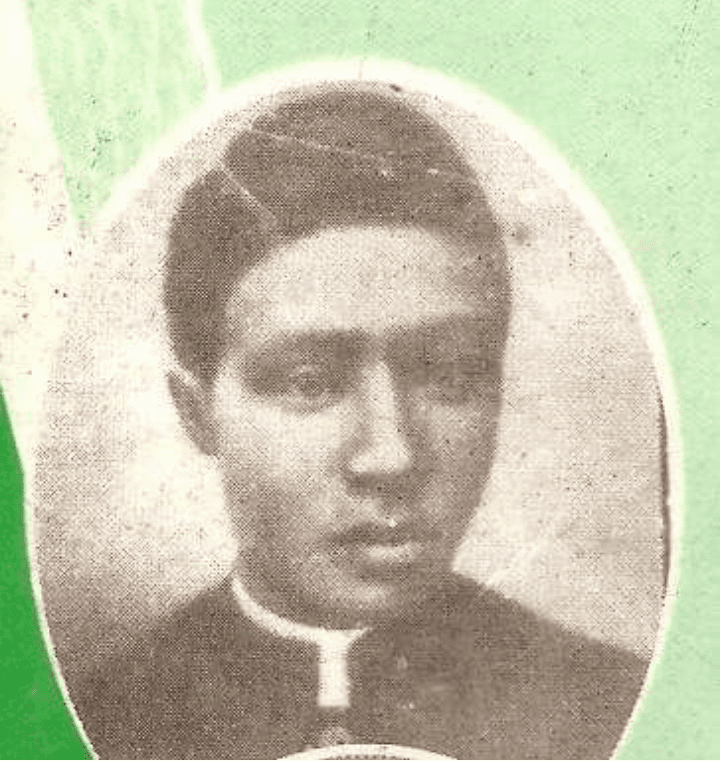
Samuel Otu (1870-1900), Ghana’s first Christian martyr: A native of Larteh-Akuapem and a Basel (Presbyterian Church) Missionary/ Teacher who was sent to the chief and people of Techimantia (under the Ashanti kingdom which was by then not part of the then Gold Coast colony) to preach the Gospel to them and help to educate them.
After they were released by the Ashantis, the Ramseyers (Fritz & Rosa) went back to Switzerland to rest.
The Ramseyers returned to the Gold Coast (Ghana) at the end of 1875 and initially settled at Kibi-Akim Abuakwa, Kwahu Ridge, Bompata and Patriensa.
In June 1896, Rosa and Fritz Ramseyer, together with their nephew, Edmond Perregaux and Joseph Adjaye, a local Christian convert completed their move to Kumasi, Although, he had earlier been there in September 1881, with the Basel missionary, Joseph Mohr and He was given a warm reception by the Asantehene (Ashanti King) Nana Mensa Bonsu who treated him as an old long-lost friend.
In July 1896, a mission station was subsequently constructed on a plot of land at Bantama acquired by Ramseyer with the blessing of the Bantamahene (Chief of Bantama) under whose jurisdiction the plot was located.
By 1899, Kumasi had seen 33 baptisms and 160 Christian converts.
In 1900, Seventeen (17) mission stations and fifteen (15) mission schools had also been established in the Ashanti territory with Kumasi being the focal point. Many of the Ashanti converts were reluctant to train as teachers after their basic education.
The Basel Mission therefore had to recruit teachers from Akuapem, Akyem, Kwahu, Ga and Krobo for the schools Ramseyer and his colleagues had built in the Ashanti territory.
In March 1900, the political atmosphere worsened again when the British colonial administrators led by the British Governor, Sir Frederick Mitchell Hodgson, demanded the relinquishing of the “Golden Stool”, the most sacred symbol of traditional authority of the Ashantis. In the view of the Governor, the Golden Stool was now a property of the Crown as the kingdom was now a British Protectorate.
The Ashantis revolted. The uprising lasted for two months and food supplies began to run out.
The Ramseyer family, together with other foreigners such as Mr. and Mrs. Jost and Mr. Weller, sought shelter at the new garrison built by the British in Kumasi.
Three native teachers of the Basel mission died during the war: Maxwell Okanta and Helena Sakyiama, both died of starvation at the fort and Samuel Otu, who was beheaded at Techimantia (Takyimantia) Ghana.
Samuel Otu, a christian and non-Ashanti who was gaining reverence among the natives and at variance with the doctrines of the local traditional priests was accused among other things of espionage for the British colonial administration by the local traditional priests.

In the absence of Nana Kofi Kuma (Chief of Techimantia) who was with his soldiers fighting alongside other Ashanti warriors against the British during the war of the Golden stool or Yaa Asantewaa War. Samuel Otu was publicly executed for refusing to denounce his Christian faith and follow that of the traditionalists.
Samuel Otu has been honoured in many ways, e.g; Samuel Otu Memorial Congregation of the Presbyterian Church of Ghana, at Larteh-Akuapem, Ghana.
Samuel Otu Presbyterian Senior High School at Techimantia (Takyimantia), Ghana.
Samuel Otu Sunday: Annually observed by the Presbyterian church of Ghana, alongside Heritage Sunday.
On Sunday, 13th May 2018 a stage drama based on Samuel Otu’s tragic story entitled “UNTOLD STORY OF THE MARTYR” was retold and directed by Rudolf Amo-Asare and beautifully acted by the Zoe Creative Art Ministry of the ICGC Zoe Temple, Tema, Ghana.
Martyr: a person who is killed because of their religious or other beliefs.
Credit: Annan Ashirifie Odehe-Bi