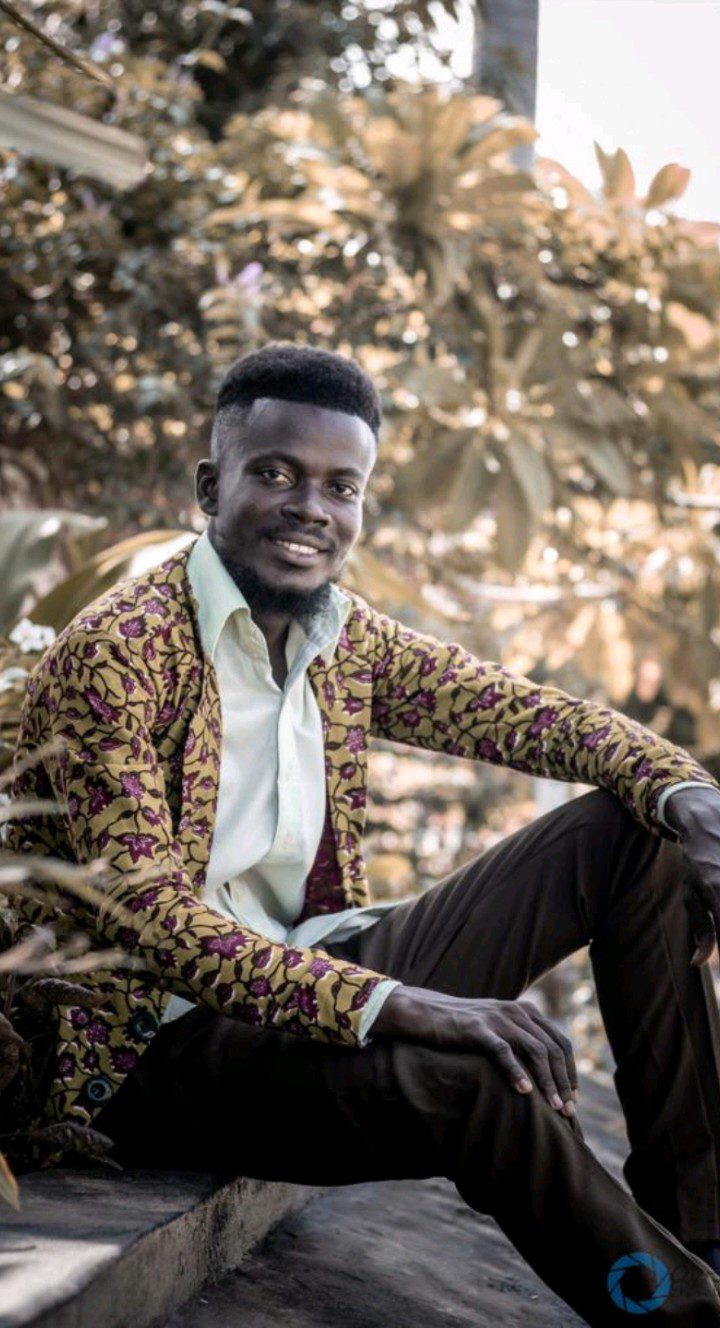
ARTICLE: New World – Ras Tbc Ofoe
By: Ras Tbc Ofoe
Lockdown.
Yes, there is fear.
Yes, there is isolation.
Yes, there is panic buying.
Yes, there is sickness.
Yes, there is even death.
But they say in Wuhan after so many years of noise, you can hear the birds again.
They say after just a few weeks of quiet, the shy is no longer thick with fumes, but blue and grey and clear.
They say that in the streets of Assisi people are singing to each other across the empty squares, keeping their windows open, so that those who are alone may hear the sounds of family around them.
They say the hotel in the west of Ireland is offering free and delivery to the housebound.
Today, a young woman l know is busy spreading flyers with her number through the neighbourhood so that the elders may have someone to call on.
Today, churches synagogues, mosques, and temples are preparing to welcome and shelter the homeless, the sick, the weary.
All over the world people are slowing down and reflecting.
All over the world people are looking at their neighbours in a new way.
All over the world people are waking up to a new reality.
To how big we really are.
To how little control we really have.
To what really matters.
To love.
So, we pray, and we remember that yes, there is fear, but there does not have to be hate.
Yes, there is isolation, but there does not have to be loneliness.
Yes, there is panic buying, but there does not have to be meanness.
Yes, there is sickness, but there does not have to disease of the soul.
Yes, there is even death, but there can always be rebirth of love.
Wake to the choices you make as to how to live now.
Today breathe.
Listen.
Behind the factory noises of your panic the birds are singing again.
The sky is clearing.
Spring is coming, and we always encompassed by love.
Open the windows of soul and though may not be able to touch across the empty square….
Sing.
The tsunami-like impact of a global pandemic has a way of drowning out foresight. Right now, it feels impossible to predict what the world will look like next week, let alone next year. Yet behavioural science and the broad sweep of history suggest that COVID-19 will transform our daily lives in the long run.
Let us not get confused: the coronavirus pandemic is above all a human tragedy and our hearts go out to all those who have lost loved ones, and to those putting themselves at risk to save others. Precisely because of this huge cost, it is vital that we learn as many lessons as we can.
Almost overnight road traffic melted away, trains stopped running, planes stopped flying, buses emptied, people stayed at home.
What did we learn?
The changes in progress — some predictable, others still hard to fathom — started brewing as soon as case counts began to escalate. An ongoing University of Southern California study published its first round of results in March, reporting that the coronavirus had already created significant shifts in people’s behaviour. Among the top findings: 85 percent of people reported washing their hands or using sanitizer more often than before, and 61 percent reported following social distancing guidelines. Twenty-two percent reported stockpiling essentials like food or water.
But that doesn’t mean they’ll disappear altogether. Survivors of collectively traumatic events tend to be especially vigilant in situations that burned them in the past. When people are forced to react to a deadly virus running rampant, they may be especially keen to keep future viruses at bay.
Each day, we’re inundated with news about the global pandemic and how it continues to strain our health care system and resources. The COVID-19 health crisis has had a disruptive impact on the way people, cities, the world itself lives and moves, with mobility being one of the industries most affected by the outbreak. With more than 7,881 positive cases in Ghana and 36 deaths as of this writing, it has been a scary yet humbling experience for everyone. There is no doubt this pandemic will be a defining moment in health care for several reasons.
From supply chain disruptions and personal protective equipment (PPE) and ventilator shortages to exhausted caregivers — both physically and mentally — this event has pushed the envelope on finding answers from health and state authorities. Hospital administrations are working harder than ever to rise to the challenge and do what is best for their frontline staff and, more importantly, the patients and the communities they serve.
The COVID-19 pandemic crisis has been uncharted waters for the entire global community. Everyone, from governments and companies to individuals, has had to deal with a new reality and with an inevitable negative impact on the economy. While we have hit pause on most of our business-as-usual activities, we quickly have adapted to the new reality in all aspects, as brands, employers and service providers.
Our new ways of interacting with each other — “live long and prosper” salutes instead of handshakes, video chats instead of conference-room huddles — are also likely to stick to some degree. The old social norm is, “you meet someone, you automatically shake hands. Those social exchanges are going to evolve. When you’re having meetings for work, people are going to start asking, do we have to meet in person? which is not something we would say before.
But what lingers most after a pandemic, or any large-scale catastrophe, is a pervasive sense that the world is fundamentally unpredictable — that life feels more fragile than it once did. The prospect theory of behaviour, popular among behavioural scientists and economists, states that we often give more weight to potential losses than gains in making a decision, and that we tend to overestimate the chances of an unlikely event like dying of a certain disease. Following a disaster, the tendency to believe that a threat is imminent may be magnified in some people.
We have learnt that we are not alone. We (well some of us) have learnt how to work from home. We have learnt what the roads are like without traffic and found that this brings benefits. Some people have learnt that the law still applies even though the roads are quiet and the car parks empty.
But now comes the hard part. Knowledge is not action. Take a potato around the world and it comes back a starchy tuber, not an expert in geography.
The big question arising from this natural experiment is: What are we going to DO about what we have learnt?
This is not just an academic question. Climate change, unless mitigated, will make the havoc wrought by Covid-19 look like a (regulated, once a day) walk in the park. We have a non-negotiable imperative to decarbonise transport. Unless we can find ways to do so without requiring everyone to massively lower their quality of life, we will find it even harder to implement than it already looks.
We must recognise this moment for what it is: a once in a generation opportunity to deliver a lasting, transformative change in how we make short journeys in our towns and cities. These are great steps, and hopefully the first of many. It is encouraging to see a practical response to the realisation that quiet streets in towns and cities, clean air, and the ability for families to walk and cycle together in safety, are possible after all.
But perhaps there are other things, deeper things we should learn. What this huge, tragic, experiment has taught us, is that habits and preferences can change overnight, if the circumstances are right. No-one expects that people will willingly return to shared transport, for example, although we might see less resistance to taking a plane on holiday than to taking the bus to work (even though, objectively, the risks are likely to be similar).
Perhaps one thing we can learn from this time, is that the stories we tell ourselves about why we do the things we do, have turned out to have only a loose relationship to reality in some cases.
For instance, office workers, who have long explained that working from the office is more productive, have mostly found that it is precisely the things which make it less productive, (the chatting at the coffee machine, lunch in the canteen with colleagues, stopping by someone’s desk to swap gossip or talk about football) are the things they really miss. They have found that work can often be done at least as well remotely, and the discipline of back-to-back videocalls has many of us working harder, or at least more intensely. This is not to say that going to the office is bad, just that the story needs to change.
Everyone will be very keen to get back to ‘normal’, but a key lesson from this crisis is that we will not be able to tell ourselves any more that there are no alternatives, or that there are not costs associated with our choices. Let us beware of the biggest, most misleading story of all: that there can only be one answer and that an average is the same as an optimum. A better world doesn’t always require everyone to change everything. The difference between a stop/start, misery commute, and a free-flowing road can be as little as 10% of traffic. Safer, cleaner streets may only involve small inconveniences to those in cars to give priority to walkers and cyclists.
During recent weeks we have learnt that many people cannot work from home and that many of the jobs (and the people doing them) that really matter to our lives, are not the glamorous well-paid jobs that have, in the past, gained all the headlines. We have also learnt that relatively small changes in the habits of those who can work from home (often the better-off anyway) can make big differences to those who have no choice but to travel every day, and whose contribution to society is bigger than we have been telling ourselves, up to now. We have the chance to tell ourselves new stories, and new stories can lead to very different outcomes.
Credit:
BBC Radio, London
BEAT


Pingback: History Lane: Meet Ghana's first Christian martyr, Samuel Otu - RTOMedium