History Lane: Meet the legendary football icon, Pele
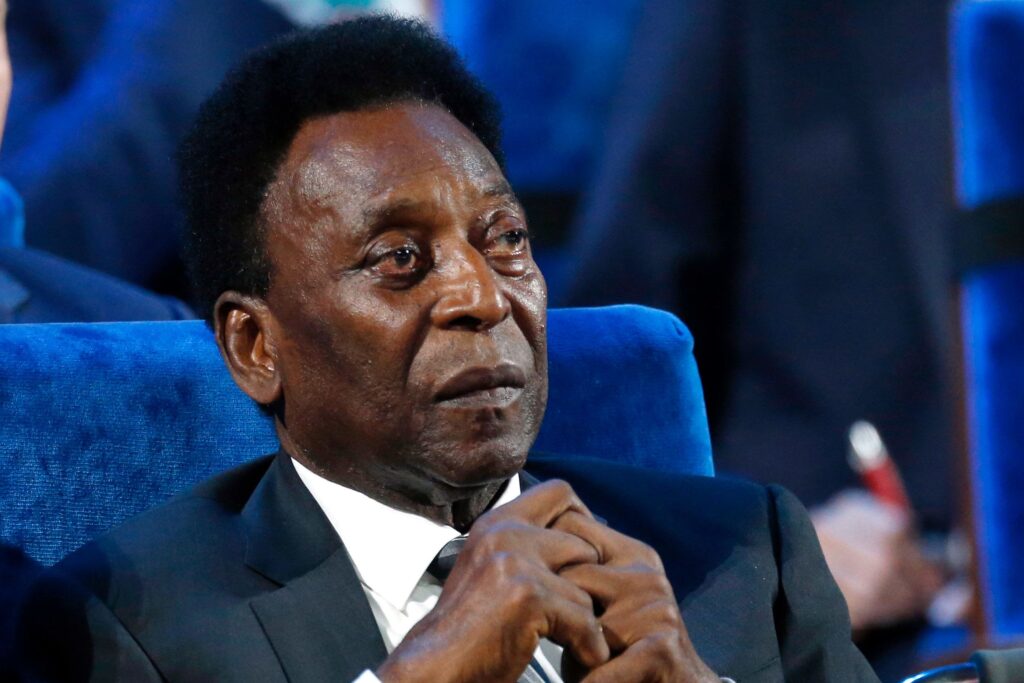
Edson Arantes do Nascimento (23 October 1940 – 29 December 2022), known mononymously as Pelé, was a Brazilian professional footballer who played as a forward.
Regarded as one of the greatest players of all time and labelled “the greatest” by FIFA, he was among the most successful and popular sports figures of the 20th century.
In 1999, he was named Athlete of the Century by the International Olympic Committee and was included in the Time list of the 100 most important people of the 20th century.
In 2000, Pelé was voted World Player of the Century by the International Federation of Football History & Statistics (IFFHS) and was one of the two joint winners of the FIFA Player of the Century.
His 1,279 goals in 1,363 games, which includes friendlies, is recognised as a Guinness World Record.
Pelé began playing for Santos at age 15 and the Brazil national team at 16.
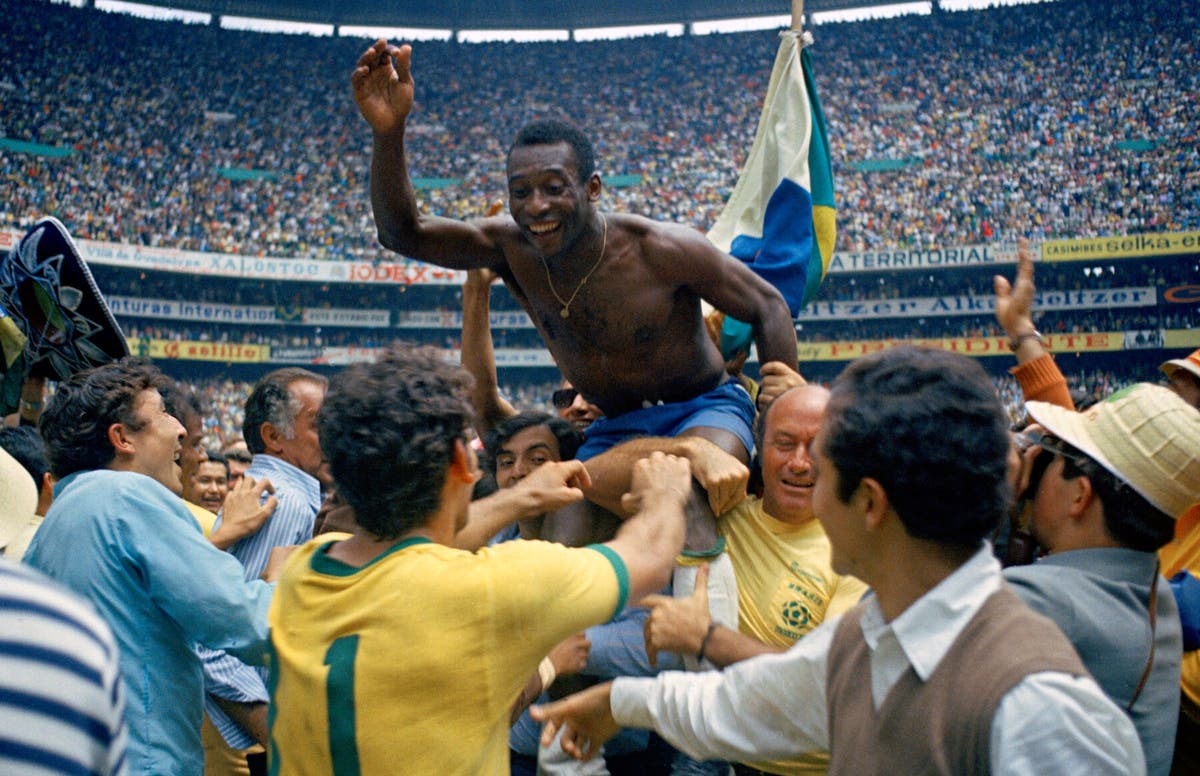
During his international career, he won three FIFA World Cups: 1958, 1962 and 1970, the only player to do so.
He was nicknamed O Rei (The King) following the 1958 tournament.

Pelé is the joint-top goalscorer for Brazil with 77 goals in 92 games.
At the club level, he was Santos’ all-time top goalscorer with 643 goals in 659 games.
In a golden era for Santos, he led the club to the 1962 and 1963 Copa Libertadores, and to the 1962 and 1963 Intercontinental Cup.
Credited with connecting the phrase “The Beautiful Game” with football, Pelé’s “electrifying play and penchant for spectacular goals” made him a star around the world, and his teams toured internationally to take full advantage of his popularity.
During his playing days, Pelé was for a period the best-paid athlete in the world.
After retiring in 1977, Pelé was a worldwide ambassador for football and made many acting and commercial ventures.
In 2010, he was named the honorary president of the New York Cosmos.
Averaging almost a goal per game throughout his career, Pelé was adept at striking the ball with either foot in addition to anticipating his opponents’ movements on the field.
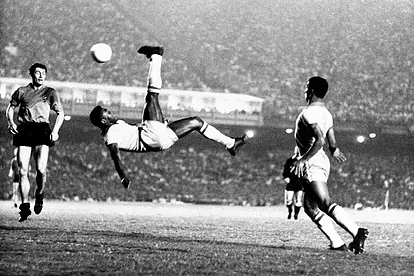
While predominantly a striker, he could also drop deep and take on a playmaking role, providing assists with his vision and passing ability, and he would also use his dribbling skills to go past opponents.
In Brazil, he was hailed as a national hero for his accomplishments in football and for his outspoken support of policies that improve the social conditions of the poor.
His emergence at the 1958 World Cup, where he became the first black global sporting star, was a source of inspiration.
Throughout his career and in his retirement, Pelé received numerous individual and team awards for his performance in the field, his record-breaking achievements, and his legacy in the sport.
Pelé was born in Três Corações, Minas Gerais, Brazil, the son of Fluminense footballer Dondinho (born João Ramos do Nascimento) and Celeste Arantes.
He was the elder of two siblings, and was named after the American inventor Thomas Edison.
His parents decided to remove the “i” and call him “Edson”, but there was a mistake on the birth certificate, leading many documents to show his name as “Edison”, not “Edson”, as he was called.
He was originally nicknamed “Dico” by his family.
He received the nickname “Pelé” during his school days, when, it is claimed, he was given it because of his pronunciation of the name of his favourite player, local Vasco da Gama goalkeeper Bilé, which he misspoke, but the more he complained the more it stuck.
In his autobiography, Pelé stated he had no idea what the name means, nor did his old friends.
Apart from the assertion that the name is derived from that of “Bilé”, and that it is Hebrew for “miracle” (פֶּ֫לֶא), the word has no known meaning in Portuguese.
Pelé grew up in poverty in Bauru in the state of São Paulo.
He earned extra money by working in tea shops as a servant. Taught to play by his father, he could not afford a proper football and usually played with either a sock stuffed with newspaper and tied with string or a grapefruit.
He played for several amateur teams in his youth, including Sete de Setembro, Canto do Rio, São Paulinho, and Amériquinha.
Pelé led Bauru Athletic Club juniors (coached by Waldemar de Brito) to two São Paulo state youth championships.
In his mid-teens, he played for an indoor football team called Radium. Indoor football had just become popular in Bauru when Pelé began playing it.
He was part of the first futsal (indoor football) competition in the region.
Pelé and his team won the first championship and several others.
According to Pelé, futsal (indoor football) presented difficult challenges; he said it was a lot quicker than football on the grass and that players were required to think faster because everyone is close to each other in the pitch.
Pelé credits futsal for helping him think better on the spot.
In addition, futsal allowed him to play with adults when he was about 14 years old.
In one of the tournaments he participated in, he was initially considered too young to play, but eventually went on to end up top scorer with 14 or 15 goals.
“That gave me a lot of confidence”, Pelé said, “I knew then not to be afraid of whatever might come”.

RTOMedium… Be informed… Get informed