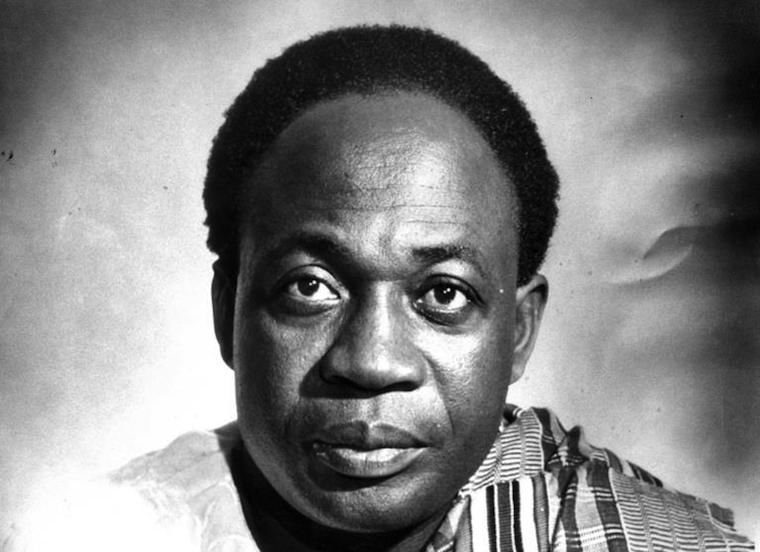
History Lane: Kwame Nkrumah, a great leader was born today September 21, 1909
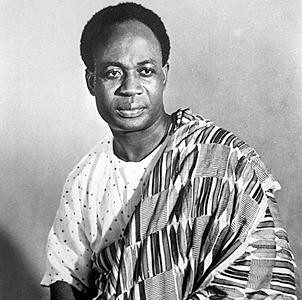
Kwame Nkrumah (21 September 1909 – 27 April 1972) was a Ghanaian politician, political theorist, and revolutionary. He was the first Prime Minister and President of Ghana, having led the Gold Coast to independence from Britain in 1957. An influential advocate of Pan-Africanism, Nkrumah was a founding member of the Organization of African Unity and winner of the Lenin Peace Prize from the Soviet Union in 1962.
After twelve years abroad pursuing higher education, developing his political philosophy, and organizing with other diasporic pan-Africanists, Nkrumah returned to the Gold Coast to begin his political career as an advocate of national independence. He formed the Convention People’s Party, which achieved rapid success through its unprecedented appeal to the common voter.
He became Prime Minister in 1952 and retained the position when Ghana declared independence from Britain in 1957. In 1960, Ghanaians approved a new constitution and elected Nkrumah President.
His administration was primarily socialist as well as nationalist. It funded national industrial and energy projects, developed a strong national education system and promoted a pan-Africanist culture. Under Nkrumah, Ghana played a leading role in African international relations during the decolonization period.
In 1964, a constitutional amendment made Ghana a one-party state, with Nkrumah as president for life of both the nation and its party. Nkrumah was deposed in 1966 by the National Liberation Council, under whose supervision, international financial institutions privatized many of the country’s state corporations. Nkrumah lived the rest of his life in Guinea, where he was named honorary co-president.
Nkrumah never returned to Ghana, but he continued to push for his vision of African unity. He lived in exile in Conakry, Guinea, as the guest of President Ahmed Sékou Touré, who made him honorary co-president of the country. Nkrumah read, wrote, corresponded, gardened, and entertained guests. Despite retirement from public office, he felt that he was still threatened by Western intelligence agencies. When his cook died mysteriously, he feared that someone would poison him, and began hoarding food in his room. He suspected that foreign agents were going through his mail, and lived in constant fear of abduction and assassination. In failing health, he flew to Bucharest, Romania, for medical treatment in August 1971. He died of prostate cancer in April 1972 at the age of 62 while in Romania.
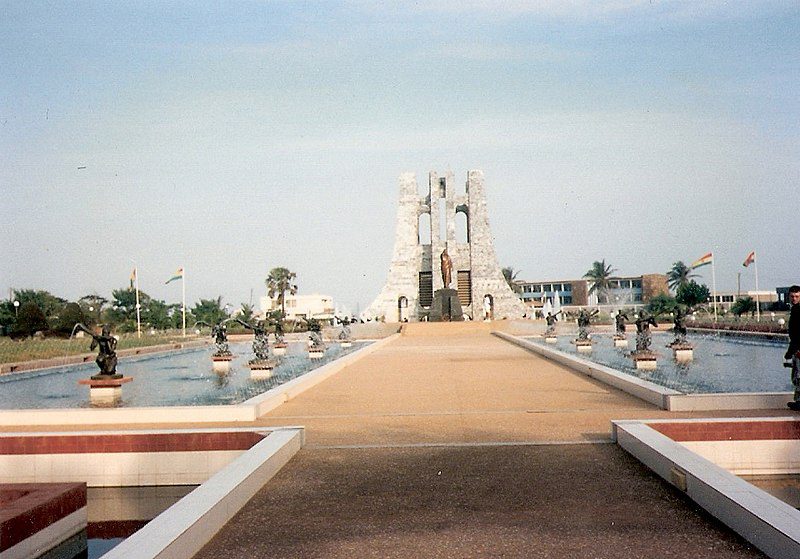
Nkrumah was buried in a tomb in the village of his birth, Nkroful, Ghana. While the tomb remains in Nkroful, his remains were transferred to a large national memorial tomb and park in Accra, Ghana.
Over his lifetime, Nkrumah was awarded honorary doctorates by many universities including Lincoln University (Pennsylvania), Moscow State University (USSR), Cairo University (Egypt), Jagiellonian University (Poland) and Humboldt University (East Germany).
In 2000, he was voted African Man of the Millennium by listeners to the BBC World Service, being described by the BBC as a “Hero of Independence”, and an “International symbol of freedom as the leader of the first black African country to shake off the chains of colonial rule.”
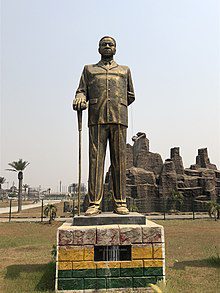
In September 2009, President John Atta Mills declared 21 September (the 100th anniversary of Kwame Nkrumah’s birth) to be Founders’ Day, a statutory holiday in Ghana to celebrate the legacy of Kwame Nkrumah. In April 2019, President Akufo-Addo approved the Public Holidays (Amendment) Act 2019 which changed 21 September from Founders’ Day to Kwame Nkrumah Memorial Day.
He generally took a non-aligned Marxist perspective on economics, and believed capitalism had malignant effects that were going to stay with Africa for a long time. Although he was clear on distancing himself from the African socialism of many of his contemporaries, Nkrumah argued that socialism was the system that would best accommodate the changes that capitalism had brought, while still respecting African values. He specifically addresses these issues and his politics in a 1967 essay entitled “African Socialism Revisited”:
We know that the traditional African society was founded on principles of egalitarianism. In its actual workings, however, it had various shortcomings. Its humanist impulse, nevertheless, is something that continues to urge us towards our all-African socialist reconstruction. We postulate each man to be an end in himself, not merely a means; and we accept the necessity of guaranteeing each man equal opportunities for his development. The implications of this for sociopolitical practice have to be worked out scientifically, and the necessary social and economic policies pursued with resolution. Any meaningful humanism must begin from egalitarianism and must lead to objectively chosen policies for safeguarding and sustaining egalitarianism. Hence, socialism. Hence, also, scientific socialism.
According to intelligence documents released by the U.S. Department of State’s Office of the Historian, “Nkrumah was doing more to undermine [U.S. government] interests than any other black African.”
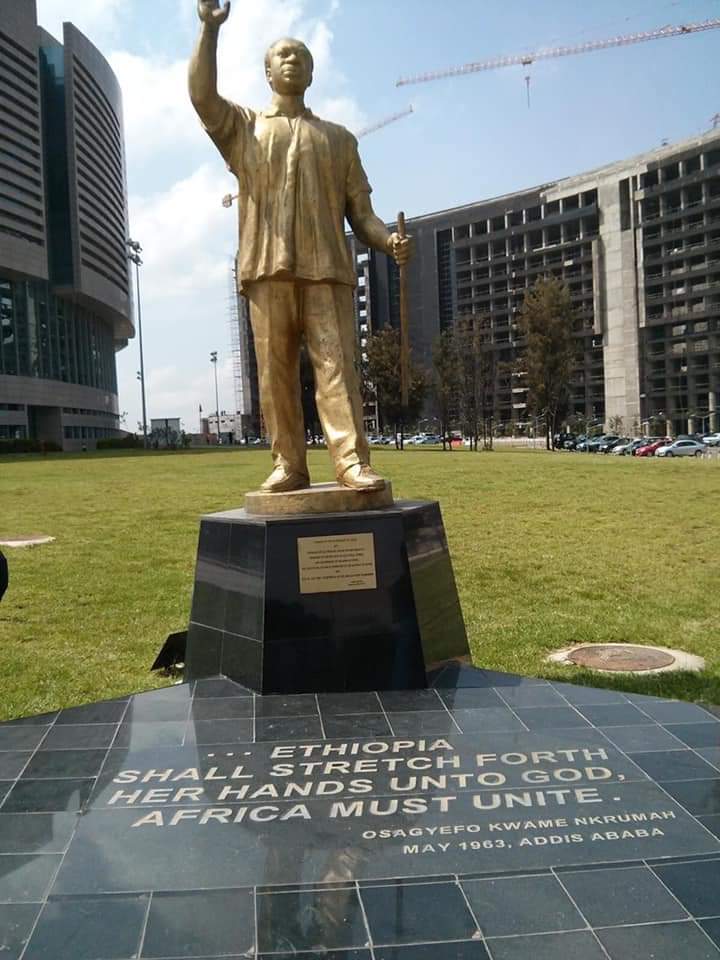
Nkrumah was also best-known politically for his strong commitment to and promotion of pan-Africanism. He was inspired by the writings of black intellectuals such as Marcus Garvey, W. E. B. Du Bois, and George Padmore, and his relationships with them. Much of his understanding and relationship to these men was created during his years in America as a student. Some would argue that his greatest inspiration was Marcus Garvey, although he also had a meaningful relationship with C. L. R. James. Nkrumah looked to these men to craft a general solution to the ills of Africa. To follow in these intellectual footsteps Nkrumah had intended to continue his education in London, but found himself involved in direct activism. Then, motivated by advice from Du Bois, Nkrumah decided to focus on creating peace in Africa. He became a passionate advocate of the “African Personality” embodied in the slogan “Africa for the Africans” earlier popularised by Edward Wilmont Blyden and he viewed political independence as a prerequisite for economic independence. Nkrumah’s dedications to pan-Africanism in action attracted these intellectuals to his Ghanaian projects. Many Americans, such as Du Bois and Kwame Ture, moved to Ghana to join him in his efforts. These men are buried there today. His press officer for six years was the Grenadian anticolonialist Sam Morris. Nkrumah’s biggest success in this area was his significant influence in the founding of the Organisation of African Unity.
Nkrumah also became a symbol for black liberation in the United States. When in 1958 the Harlem Lawyers Association had an event in Nkrumah’s honour, diplomat Ralph Bunche told him:
We salute you, Kwame Nkrumah, not only because you are Prime Minister of Ghana, although this is cause enough. We salute you because you are a true and living representation of our hopes and ideals, of the determination we have to be accepted fully as equal beings, of the pride we have held and nurtured in our African origin, of the freedom of which we know we are capable, of the freedom in which we believe, of the dignity imperative to our stature as men.
In 1961, Nkrumah delivered a speech called “I Speak Of Freedom”. During this speech he talked about how “Africa could become one of the greatest forces for good in the world”. He mentions how Africa is a land of “vast riches” with mineral resources from that “range from gold and diamonds to uranium and petroleum”. Nkrumah says that the reason Africa isn’t thriving right now is because the European powers have been taking all the wealth for themselves. If Africa could be independent of European rule, he said, then it could truly flourish and contribute positively to the world. In the ending words of this speech Nkrumah calls his people to action by saying “This is our chance. We must act now. Tomorrow may be too late and the opportunity will have passed, and with it the hope of free Africa’s survival”. This rallied the nation in a nationalistic movement.

RTOMedium… Be Informed… Get Informed