
History Lane: The Ada Asafotufiami Festival
By: Ras Tbc Ofoe
In the olden days. the Ada State comprised of the present-day Dangme East (Ada East District and Ada West District), and the following States: Agave, Sokpoe, Tefle, Mepe, Mafi, Bakpa and Battor with their Divisional Chiefs supporting the overlord of the Ada State as the Paramount Chief. The later States broke away to form what is known as the Tongu State, due to that in 1954 new positions of Divisional Chiefs (Wetsoyihi) were created among the following ten (10) Clans of Ada: Adibiawe, Ohuewem, Kabiawetsu, Lomobiawe, Korgbor, Kabiaweyumu, Terkpebiawe, Kudzragbe, Kpono, Dangmebiawe in addition to their respective Wornorhi (Traditional Priests) and Asafoatseme (Clan Warlords) to support the paramount stool of Ada.
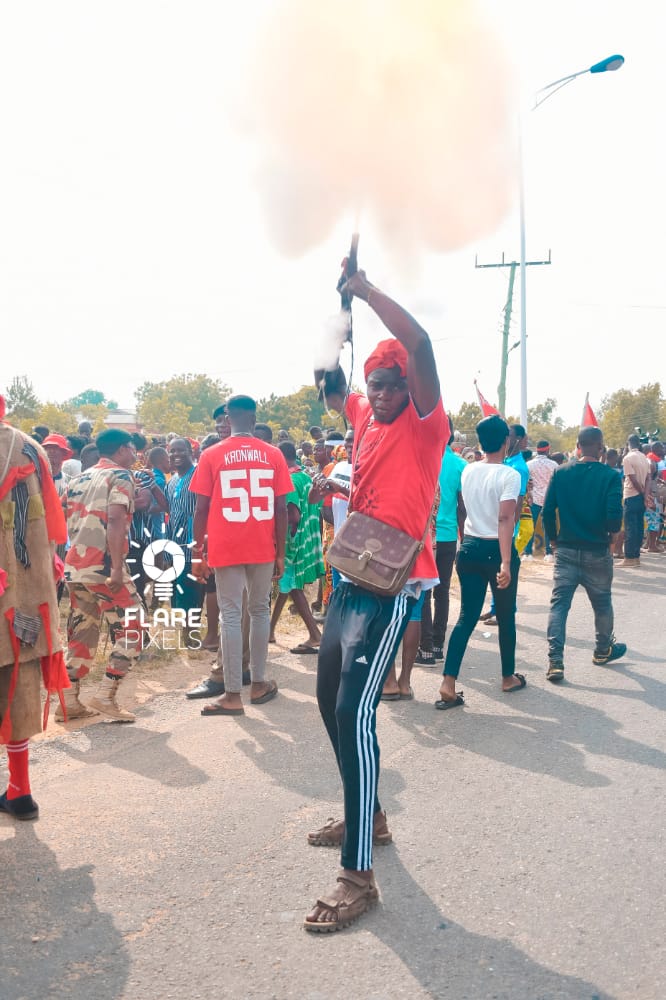
Asafotufiami is a festival of the people of Ada Traditional Area in the Dangme East of the Greater Accra Region is a rich cultural heritage celebrated annually in the first week of August. The celebration of the festival is in remembrance of the achievements in the war for settlements fought by their ancestors, hence the name “ASAFOTUFIAMI”. “ASAFOTUFIAMI” as the name implies, ASAFO – group, TU – musket, FIAMI – firing; literally meaning group firing of musketry.
The following are ancient wars in which the Adas were engaged in; Ada-Anlo War, battle of Nonobi, Adas (supported by Akwapim, Akim Abuakwa, Krobo and Agave) defeated Anlo (1844), Unsuccessful invasion of Anlo by Ada, Akim Abuakwa, Akwapim, Krobo and part of Mefi while Akwamu supported Anlo. Ada attacked by Anlo and burning of Ada Township. Kantamanso War near Dodowa against the Ashantis; the Ashantis were defeated. Glover War; Capt. Glover invaded Anlo with forces drawn from Ga, Ada, Krobo, Krepi Akwapim, while Anlo, supported by Avonos and Mafi, were defeated at battles near Adidome, Aveno and Wheta.
According to tradition, the celebration starts on a Thursday in the first week of August with the arrival of sons and daughters, well-wishers and guest(s) from other places to the town and goes on until the following week. Thursday is devoted for house cleaning ceremony and pouring of libation at the respective shrines of the various families and keeping of vigil.
There are two (2) Asafo (groups) within the Ada State namely: Akomfode and Asorkor, membership of which according to tradition is by matrilineal linage. For this reason, children of the same father and different mothers at times find themselves in the opposite company (Asafo) and this confirms the appellation of the people of Ada as “Nyeko Bi, Tseko Bi”.
At dawn on Friday, as part of the schedule for the celebration, the two groups (Asafo) beat their respective drums to summon their members for the onward march to LUHUESE on the outskirts of Big-Ada. There, they are compelled and according to ancient custom, all young men who attain puberty age were then initiated into their respective Asafo (groups) and taught how to handle, load a musket and fire same for the first time. This is followed by war formation and the initiates being taught the ancient tactics of warfare.
This continues until late afternoon when they return to the Big-Ada town dressed in traditional military attire, adorned with leaves and palm branches symbolizing conquering heroes coming back from the war fronts amidst musket fire and chanting: Awe-e-e-e – Agba e, Bleku Tso – Nsu, O, Nsu -Enam O, Enam Enam O, Enam, Manye O, Manye – Adubani Kpotoo…
Singing, firing of musketry, and dancing continue here until sunset. The procession then proceeds to Kpomkpo Panya where the Asafo (groups) form a single file along the riverside and fire three consecutive volleys into the river. They dip their feet into it and wash their hands, symbolizing the removal of all evil and bad omens of the year, anticipating good fortune in the coming year.
All the followers of the Asafo (groups) adhere to the custom of feet dipping and hand washing ceremony. The procession disperses, and everyone retires home with songs of jubilation continuing until late at night. The newly initiated young men, with their friends, proceed to the homes of their in-laws to pay homage by firing musketry thrice, acknowledged by cheers and congratulations of initiation. Drinks and other refreshments are provided by the in-laws and the household. The day is rounded off with eating traditional meals and heavy drinking.
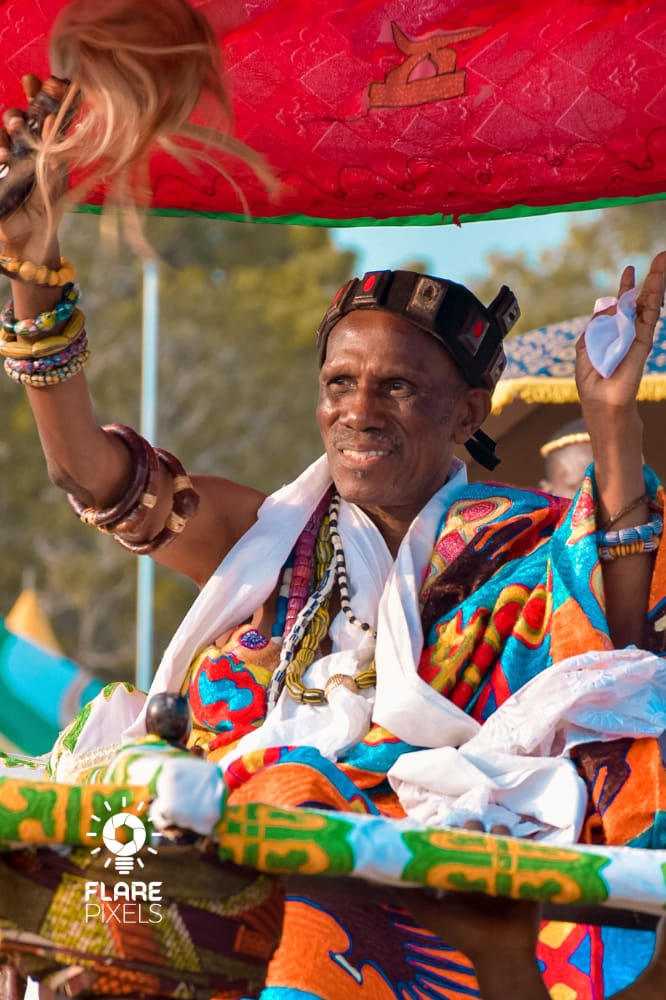
The next day, Saturday is known for the durbar of the Paramount Chief, Divisional Chiefs and Asafoatseme carried in their palanquins through the town to the Big-Ada Presbyterian Junior Secondary School Park where the elders, men, women and children dress up and assemble to receive them.
Ada Youth Groups and other charitable societies, established in certain towns of the country, also in their respective uniforms of identity, parade through the streets of Big Ada to the durbar grounds. There, they march past and take their positions for the Saturday and Sunday functions, singing their patriotic and melodious songs to grace the occasion.
After the Paramount Chief greets the Divisional Chiefs, Asafoatseme, Elders and the People, he sits in state to receive in return, Greetings and homage of his people… The swearing of Allegiance by the Asafoatseme to the Paramount Chief, each swearing sealed with volley of musketry by the divisions. The swearing of allegiance to the Paramount Chief is done with the mentioning the ancient wars in which the Adas fought.
After the day’s events conclude, the Paramount Chief, divisional chiefs, Asafoatseme, elders, and the people return home, accompanied by the youth associations and benevolent societies, with songs, drumming, and jubilation. Cinema shows and grand ball dances are attended in the evening.
On Sunday a non-denominational open-air church service is held at the venue of the durbar to give praise and thanks to the almighty God for His abundant blessings and the success of the festival.
The following weekdays, Monday – Thursday are occupied with boat racing, tug of war, get-togethers for the aged, river excursions, football matches, and greetings among individuals bidding goodbye to each other with happy memories of the year.
The celebration of the festival according to history was discontinued because of World War I. To encourage sons and daughters residing in different places to return home and assist the elders in the development of Ada State. The Ada Pastors and Teachers Association (APTA) collaborated with the Ada National Improvement Association (ANIA) to propose the revival of the festival to the chiefs and elders of the state. The proposal received overwhelming support from the chiefs and elders of the Ada state; thus, the revival of the ancient “Asafotu” Festival began again in 1937.
The event celebrates ancient wars and draws a big crowd of people to Ada. Historically, the Asafotufiami is a remembrance of ancient wars with neighboring tribes such as the Ewe.
These days, the festival is a grand homecoming for the Adas and Africans in the diaspora. As many of the Ada’s were enslaved during the transatlantic slave trade.
The face of the festival has changed with the addition of numerous activities, including the fetching of water with baskets at Kpomkpo Panya, Big-Ada. The marching of the Asafoatseme and their troops to “A plɛ nɛ α hiɛ” a place at the Big-Ada courtyard, termed as “Nga noɔ yami”.
Do well to attend the Ada Asafotufiami Festival this year and every year in your numbers to enjoy the company and hospitality of ‘Okorli Abime’ and the new activities.



Thank you for this info, Ada and Ewes go way back.
Thanks for the feedback, please don’t forget to share.
Pingback: History Lane: Divisional Chief of Sokpoe confirms Tongu State was formerly under Ada State - RTOMedium