History Lane: Konkomba farmers, Chopowa 1910
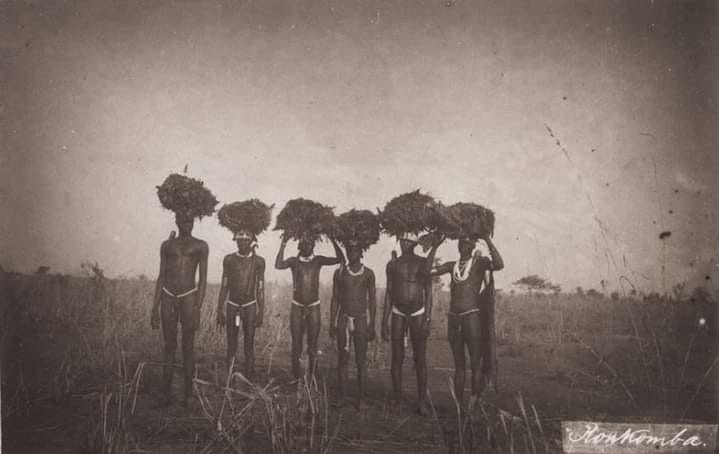
Konkomba farmers at Chopowa, Ghana. 1910
The Konkomba people are a Gur ethnic group residing mainly in the Northern, Brong Ahafo, Volta, Eastern and Greater Accra Regions of Ghana.
Saboba, Chereponi and Nanumba Districts, Gushiegu and Karaga districts, East Mamprusi, Yunyoo-Nasuan, Zabzugu and Tatale-Sanguli districts in the Northern Region and the Nkwanta North and South Districts in the Volta Region are a few examples of administrative districts where Bikpakpaam are seen in huge populations.
Other key districts where Bikpakpaam are in Ghana are Atebubu, Kintampo, Techiman and Yeji in the Brong Ahafo Region.
According to the Act 280 of the Anatomy act of Ghana, the Konkomba people (known as Bikpakpaam) are the second largest ethnic group in the Northern Region of Ghana.
The 2010 census data indicates that Bikpakpaam in Ghana number 823,000 and applying the intercensal growth rate would give a population of more than one million now. CIA The World Factbook reports in Demographics of Ghana that Konkomba people are the 8th largest Ethnic group in Ghana representing 3.5% of the Total population of Ghana.
Saboba (Chabob) in the Northern Region of Ghana is the capital town of all Bikpakpaam in Ghana. Bikpakpaam are also found in the republic of Togo, a sister West African country to Ghana.
In Togo Bikpakpaam reside mainly in the Kara, Central and Plateaux Regions. Guerin Kouka (a.k.a. Nanguem Do, the capital of Dankpen district) in the Kara Region is the capital town of Bikpakpaam in Togo. Dankpen district is located in the north western corridor of Togo.
In Schwartz’s (2005) account, Bikpakpaam number about 50,100 in Togo. The 2011 census in Togo indicates however that the total population of Bikpakpaam in Dankpen district alone was 122,209.
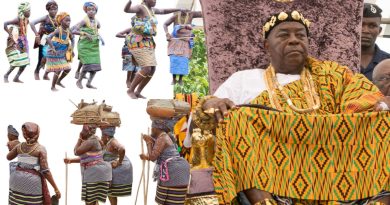
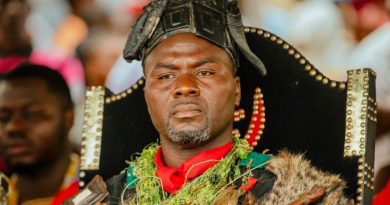
The traditional dance of Konkomba people is Kinachunŋ (pronounced k-i-naa-chung). All Konkomba settlements are led by a traditional chief called Ubor.
In Bikpakpaam dominant areas, the people have instituted or established their own chieftains who serve as overlords of the settlements. For instance, the Saboba area has the Uchabob-bor as the overlord. Bikpakpaam strongly believe in solidarity, determination and hard-work.
Until the turn of the 21st century, their primary occupation was farming and animal husbandry. In occupational terms, Bikpakpaam are mainly subsistence farmers and rearers of animals such as poultry, small ruminants and cattle.
This, probably, explains their scattered settlement across the West African sub-region. Indeed, Maasole intimates that Bikpakpaam have always been on the move, in search for fertile farmlands.
Most Konkombas are actively in education today and a recent research projects that Konkombas will become a dominant force in politics, health, education and the civil society by 2025.
The Konkomba natively refer to themselves as Bikpakpaam (plural form) and to their language as Likpakpaln. A male member of the tribe is denoted as ukpakpaanja while a female takes ukpakpaanpii.
However, the anglicized form, ‘Konkomba’ has been the term commonly used to refer to both the people and the language. Bikpakpaam are an aboriginal people of northern Ghana.
Rattray (1932) talks of Bikpakpaam as an important ethnic grouping in the northern territories of Ghana.
Maasole (2006) also described Bikpakpaam as, ‘aboriginal’ people of Northern Ghana. Before the arrival of many other ethnic groups in the northern regions of Ghana in the 1400s and 1500s, Bikpakpaam were already settled in the area.
The origin of Bikpakpaam has been a subject of research for a long time now. It is on record that Bikpakpaam settled more widely in the eastern corridor before the arrival of many other ethnic groups in the northern regions of Ghana in the 1400s and 1500s,.
Bikpakpaam then migrated into other territories in the first half of twentieth century, partly occasioned by colonial pressures and partly in search of fertile farmlands. This opened the door for other tribes to enter and occupy their lands.
The history of where Bikpakpaam came from to settle in Ghana is not well known. What is known, however, is that Bikpakpaam occupied the area called Kyali/Chare (now Yendi) until the Dagombas advanced further east with their expansion and pushed them further away with the support of the colonial masters.
Fynn (1971) asserts ‘we know that the ancestors of the Dagombas met a people akin to the Konkomba already living in northern Ghana’.
According to narratives by elders of Kikpakpaan, the Gonjas, under Ndewura Jakpa, defeated Dagombas under Ya Na Dariziogo and compelled the latter to abandon their capital (currently believed to be Tamale/Kumbungu areas) and move it to its present site, Yendi, which was then a Bikpakpaam town called Chare. The newcomers pushed back Bikpakpaam and established divisions among them. Despite the assertion of suzerainty, Dagombas seem never to have exercised close control over Bikpakpaam.
According to Martin (1976), the Dagombas pushed back the Konkomba and established divisional chiefs among them. The main towns had the character of outposts, strategically located on the east bank of the River Oti but Bikpakpaam were by no means assimilated. Relations between them and the Dagombas were distant and hostile. There was little, if any, mixing by marriage. Part of the oral history of the creation of Dagbon suggests that the Dagombas conquered Bikpakpaam when they moved into the eastern part of the Northern Region.
Bikpakpaam however have vehemently and consistently refused the claim that they were in the battle against Dagombas. The Konkomba have often insisted that they voluntarily moved away, in search for fertile lands and greener pastures for their livestock, when Dagombas arrived.
David Tait (1964) quotes an elder of Bikpakpaam as saying “When we were growing up and met our fathers, they told us they (our forefathers) stayed in Yaan/Chare (Yendi) with the Kabre and Bikwom.
The Dagombas at the time lived mainly in Tamale and Kumbungu from where they rose, mounted their horses and moved towards Yendi”. We saw the horses and had to move further east.

Credit:
Annan Ashirifie Odehe-Bi/Wikipedia