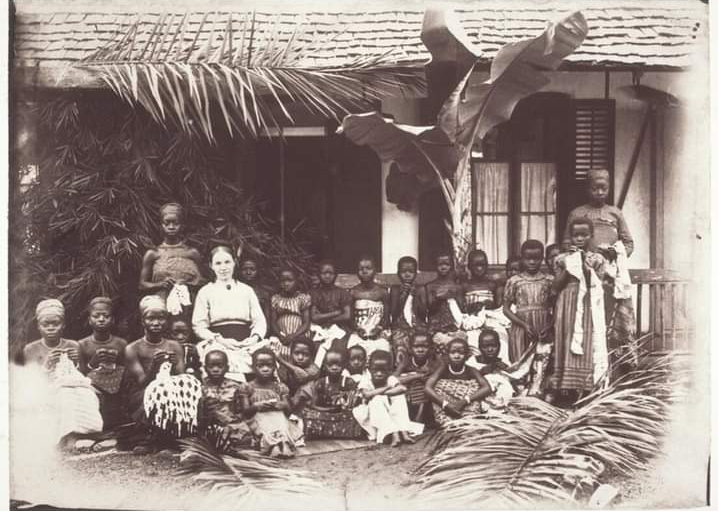
History Lane: Mrs Weber & Pupils, Akronpong – Akuapem 1885
Mrs. Marie Oechsle Weber (Teacher) and Pupils of Basel Mission Girls’ School at Akropong – Akuapem, Ghana. 1885
Akropong is a town in South Ghana and is the capital of the Akuapim North District, a district in the Eastern Region of South Ghana. This town is known for producing snails and palm oil. Akropong has a 2013 settlement population of 13,785 people.
Akropong was the site of a mission station run by the Basel Mission.
Akwapim in which we see today became what it is from immigration and tribal wars.
About 1300 A.D the Guan people came to settle in the Akwapim mountains from the Attara Finam which is in the Volta region.
The People of Akropong celebrate Odwira and this ceremony is usually held in September/October. Odwira is one of Ghana’s many festivals that see attendance from people from all walks of life including the diaspora.
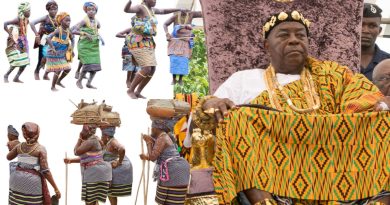
They are notable for the famous Adowa dance.
For many decades, the Odwira Festival has been a staple of Ghana’s colourful, vibrant and diverse cultural expression, bringing together people from all walks of life to celebrate themes of victory, gratitude and harvest, in unity. However, even before Odwira became a part of Ghana’s cultural landscape it had long been celebrated by the people of Akropong, Amanokrom and Aburi in the Eastern Region.
Key cultural activities
(Monday) The day of purification
Clearing of the path to Amanprobi – the First settlement established in 1730 by the Akyem warriors led by Nana Safori, who went on to become the First Okuapehene in 1733. This private ancient custom is led by the Abrafo (State Executioners) and their Chief, Adumhene. They usher in the Odwira with purification of the Kingdom with herbs.
(Tuesday) The day of harvest
The parading of the harvest of new yams through the principal streets of Akropong, capital of Okuapeman accompanied by singing, drumming and dancing. The Abrafo stop periodically to break the new yams into pieces and leave on the streets for children and others to collect, cook and eat.
In the late afternoon, the Abrafo amidst the firing of musketry return to Amanprobi to perform private rituals and then formally present the Odwira to Okuapehene who will be seated in state at the Palace with his Divisional and other sub-chiefs. On arrival at the Palace, the Abrafo go directly up to the Okuapehene who will be draped in a traditional cloth. Intense firing of musketry, drumming and dancing completes the traditional day of activities.
(Wednesday) Opening of the Adae Butuw, Commemoration of the dead and the Cleansing of Stools and regalia in the Ademi River.
Activities for the day are preceded by drumming to signify the traditional lifting of the ban on noisemaking, imposed 40 days earlier in preparation for the Odwira festival. This sacred day is dedicated to the reconnection of the living and the dead. Traditional rulers, individuals, members of families and communities who died during the course of the year are honoured and mourned. This day also enables friends and sympathisers who could not attend funerals to symbolically pay their respects.

At 10pm, a curfew is imposed on Akropong. Under the cloak of symbolic darkness, the Abrafo take the Stools and regalia of Okuapeman to Ademi mu (the river) for the sacred cleansing rituals. On their return, they present themselves and the cleansed Stools as well as regalia. In this private ceremony, the Okuapehene symbolically strips naked, is wrapped in a sacred strip of cloth and he fires 3 rounds of a musket, signifying the close of the day.
(Thursday) The day of Feasting
On this day, the pouring of libation in the Stool room and the presentation of a traditional menu – mashed yam, boiled eggs and salt free mutton is made. This solemn process is repeated at both Amanprobi and at Nsoremu (located on the boundary between Akropong and the Abiriw market, this is the site where the elders of the original Guan inhabitants met with the Akyem warriors and granted the latter, the right to both settle and govern as the Paramount Chief. Typically, a colourful procession including the Okuapehene, followed by the Krontihene and other Chiefs in order of seniority. They are led by maidens carrying bowls of food, water and schnapps.
The Okuapehene will usually sit in state in the Palace to receive homage from his Chiefs, Elders, Friends of Okuapeman, the Clergy, Government Officials, Members of the Diplomatic Corps and the public. The guests present traditional gifts of firewood, livestock, foodstuffs, drinks, clothes and money.
(Friday) The Grand Durbar
The Chiefs, Elders and People of Okuapeman congregate at Mpeniase (the forecourt of the Okuapehene’s Palace) to publicly pay homage. Attended by the Clergy, Government Officials and others, the Okuapehene presents a review of the year and outlines projects and development activities for the hew year. The Okuapehene receives goodwill messages from the Government and his people, both at home and abroad.
Akropong is north east of Accra, and the journey from Accra to Akropong is 1 hour
Due to the altitude of Akropong, the climate is a lot cooler than neighbouring Accra. The road which climbs the hillside to Akropong is a toll road
There is a higher charge for vans and lorries. From the road most of Greater Accra is visible below, although the one stopping space for pictures on this section of road has a “No Stopping” sign.
Akropong has several educational institutions across all th town. The first teachers training college in Ghana, Presbyterian Training College is located in Akropong. The Presbyterian Church has a university in the town as well
Akropong is also known for its Special education for the blind (Akropong School for the Blind)
Below are some of the many secondary schools in Akropong.
- H’Mount Sinai Senior High School
- Okaupeman Senior High School
Credit:
Annan Ashirifie Odehe-Bi/Wikipedia