
Training employees to become communicate master with 3-6-5 Formula || RTO Medium
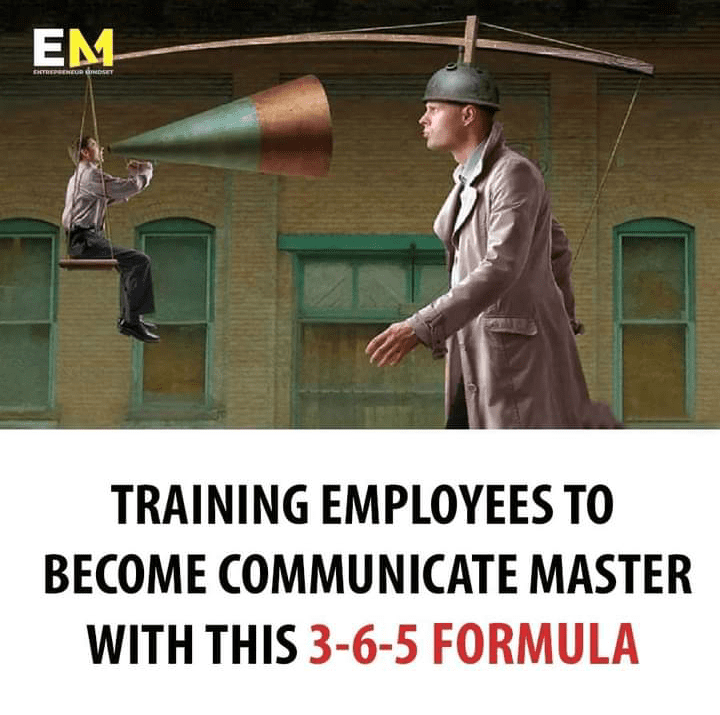
Training Employees To Become Communicate Master With This 3-6-5 Formula
Sometimes it’s simply the same words, but if you know how to use the 3-6-5 formula to communication, you’ll get a 2-3 times more positive response from the other side.
- Formula 3-6-5: 3 out of 3 basic skills
Step 1: Think before you speak
Spontaneous, unthinking words often backfire and sometimes even mislead the listener. At least don’t say things like “This is a very important offer!”
Step 2: Guess the opponent’s mentality
Temporarily forget about your own suggestions, judge the opponent’s psychology, based on daily expressions, including factors such as personality, mood… guess what the other person will think about your suggestion.
Step 3: Consider using words that match the interests of the other party
When making an offer, put the other person’s interests ahead of your own. Based on the opponent’s psychology to choose the right words.
For example:
A customer goes to the store to buy a shirt, but there is only one left, you hope the customer would take it.
Step 1: Think before you speak: Don’t say it out loud: sorry, this style only has one left.
Step 2: Guess the opponent’s psychology: customers may want to buy, but they are afraid that many people have worn them, but if it is fashionable, they will still want to buy.
Step 3: Use the right words: You can say: This shirt is a hot style this year, this is the last one in the store.
- 3-6-5 Formula: 6 in 6 Breakthroughs
Speak well, in other words, know how to flatter
Not only will you gain sympathy from the other side, but also make them happy with your proposal.
For example:
Instead of saying: Sorry, this styleonly has one left
Let’s say: This style is very hot this year, only one left.
Freedom of choice
Don’t make a choice either one or the other, make both appropriate choices. That way, no matter what the opponent chooses, you can still achieve your goal. At the same time, it also gives them the feeling of being “free” to choose.
For example:
Instead of saying: would you like to call it a little sweeter?
Let’s say: Sweet taste has type A and type B, which one would you choose?
Feeling recognized
Psychology calls this “respect for needs”, that is, a person can produce results that correspond to the expectations and expectations of others. Others say you have the upper hand in this matter, you can leave it to you to handle, you will be happy to accept it even if you are not really good at it.
Instead of saying: Clean the windows, I’m busy
Say: You’re taller than me, so you can clean the windows, please!

Has to be you
When listening to other people say things like “only you can…”, the other party will feel accomplished, proud and very easily persuaded.
For example:
Instead of saying: We will replace it for you free of charge.
Let’s say: We only replace people who are always supportive of our company like Mr. XXX here for free.
Teaming up
Often, we would rather work with others than do or go somewhere alone. Vin at this point, no matter how troublesome, the other party will not dare to refuse you.
For example:
Instead of saying: you work hard a little more
Say: I want to go jogging in the evening, but I’m afraid to go alone, can you come with me?
Show appreciation
When a person receives compliments or good intentions from others, they will have a grateful mentality.
For example:
Instead of saying: Move this table to another place for me.
Say: Move this table to another place for me, thanks!
- 3-6-5 formula: 5 tricks
Create Curiosity
Everyone has a curious mentality, the same content but the one that makes them more surprised will leave a stronger impression.
For example:
Instead of saying: It takes only half an hour to learn to ride a bicycle
Say: Oh, it only takes half an hour to be able to ride a bicycle!
Using antonyms
Putting the content you want to convey next to an antonym will leave a deeper impression.
The method of using opposites is a very important trick. Usage is as follows: determine the content to be conveyed, the first half of the sentence adds antonyms, the second half adds other words so that there is a match before and after.
Example: Our coffee is very rich and twice as refreshing.
If it’s rich, who would think it’s refreshing?

Use a little literary language
We often say that talking is “cheesy”, sometimes it brings a very good effect.
For example:
Dreams are not imagined, but they are our voices, our inner desires.
Repeat method
Extremely simple, but makes others remember for a long time.
For example:
That is a very, very smart, vivacious employee.
Use numbers
In words, adding numbers will make the words more convincing, and can also attract the attention of others. Curious numbers should be odd.
For example:
His working speed is 3 times faster than other employees.
Genius is a combination of 1% hunch and 99% effort.
Usually, directly saying what you think to the other person will not bring the best results when trying to convince them, but if you speculate on the other person’s mentality and then say it, the effect will be much better. It is no coincidence that the elders advise us to “bend your tongue seven times before you speak”.
In the marketplace, the two best and most effective methods of communication are “speak well” and make the other person feel “recognized”.
In the workplace, if superiors make their subordinates feel that they are recognized and subordinates also show their recognition to their superiors, the relationship between the levels will be greatly improved and the environment will be greatly improved. The workplace from there will also be much more comfortable and nice.
By: Entrepreneur Mindset





How do you guess their psychology?