History Lane: Meet Mathieu Da Costa, first free black person in Canada.
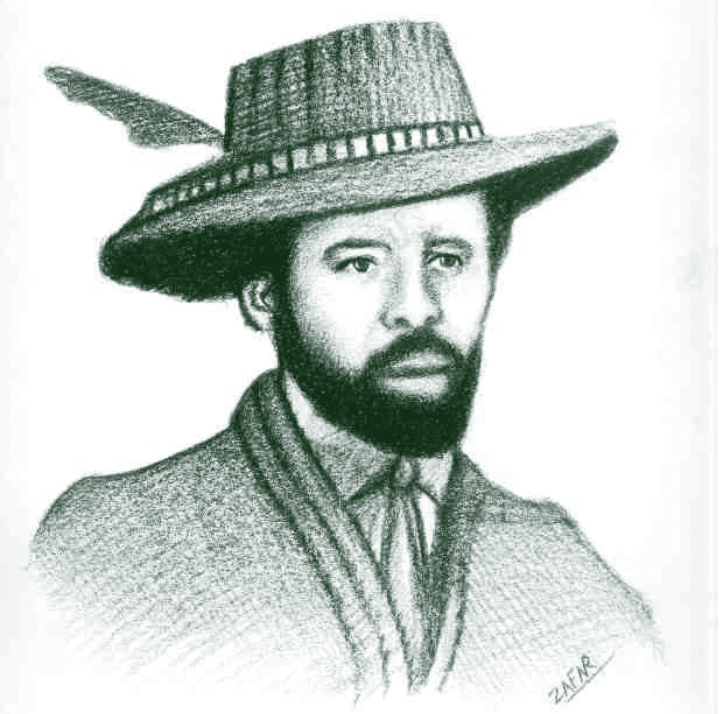
Mathieu Da Costa from the Benin Empire (Southern Nigeria).
Da Costa is the first recorded free black person in Canada.
He had some education and was also baptized.
Even though his actual name is in dispute he was identified as Mathieu Da Costa in English documents, Mathieu De Coste in French documents, and in Dutch documents he was known as Matheus de Cost.
Da Costa was known to have been a freeman favoured by explorers for his multilingual talents.
His portfolio of languages included Dutch, English, French, Portuguese, pidgin Basque as well as several different Algonquin dialects.

He was originally acquired by the Portuguese in early 1600s for his translating abilities, having learned their language so quickly, the Portuguese saw the valuable of Da Costa’s language skills in future cartography expeditions to the new world.
An interpreter, translator, and general go-between- the Portuguese named him “o grumete” (the cabin boy). After learning the languages of the L’nug (Mi’kmaq), Innu and the Eastern Algonquian language on a Portuguese expedition in 1603.
Da Costa later was sought after by both the English and the Dutch to help in their contacts with the aboriginals, however, he was hired for three years by Pierre Du Gua de Monts (a French), his annual salary was to be 60 crowns, about 195 livres (equivalent to $37.05 dollars today) which was a significant amount.
Da Costa accompanied Du Gua de Monts and Samuel de Champlain on more of their voyages to Acadia and the St Lawrence, both in Canada.
In February 1607, the Dutch seized Du Gua’s ships near Tadoussac, Canada, in a trade dispute, and took Da Costa to Amsterdam, Holland; he managed to use it as an opportunity to learn the Dutch language as well.
In December 1609, Mathieu Da Costa was imprisoned in Le Havre, France, the reason behind the charges against him are unknown, but he was accused of insolence, basically Da Costa was an independent spirit and spoke his mind freely.
Da Costa’s interpretation, translation and communication skills helped bridged the cultural gap between the early European explorers and the Aboriginals in Canada.
His work in Canada is honoured at the Port Royal Habitation National Historic Site of Canada in Annapolis Royal, Nova Scotia.
The Mathieu Da Costa Challenge is an annual creative writing and artwork contest launched in 1996 by the Department of Canadian Heritage; the challenge encourages youth to discover how diversity has shaped Canada’s history and the important role that pluralism plays in Canadian society.
A domestic rate postage stamp honoring da Costa was issued by Canada Post on February 1, 2017, in conjunction with Black History Month.
Credit: Annan Ashirifie Odehe-Bi